

 Tiếng Việt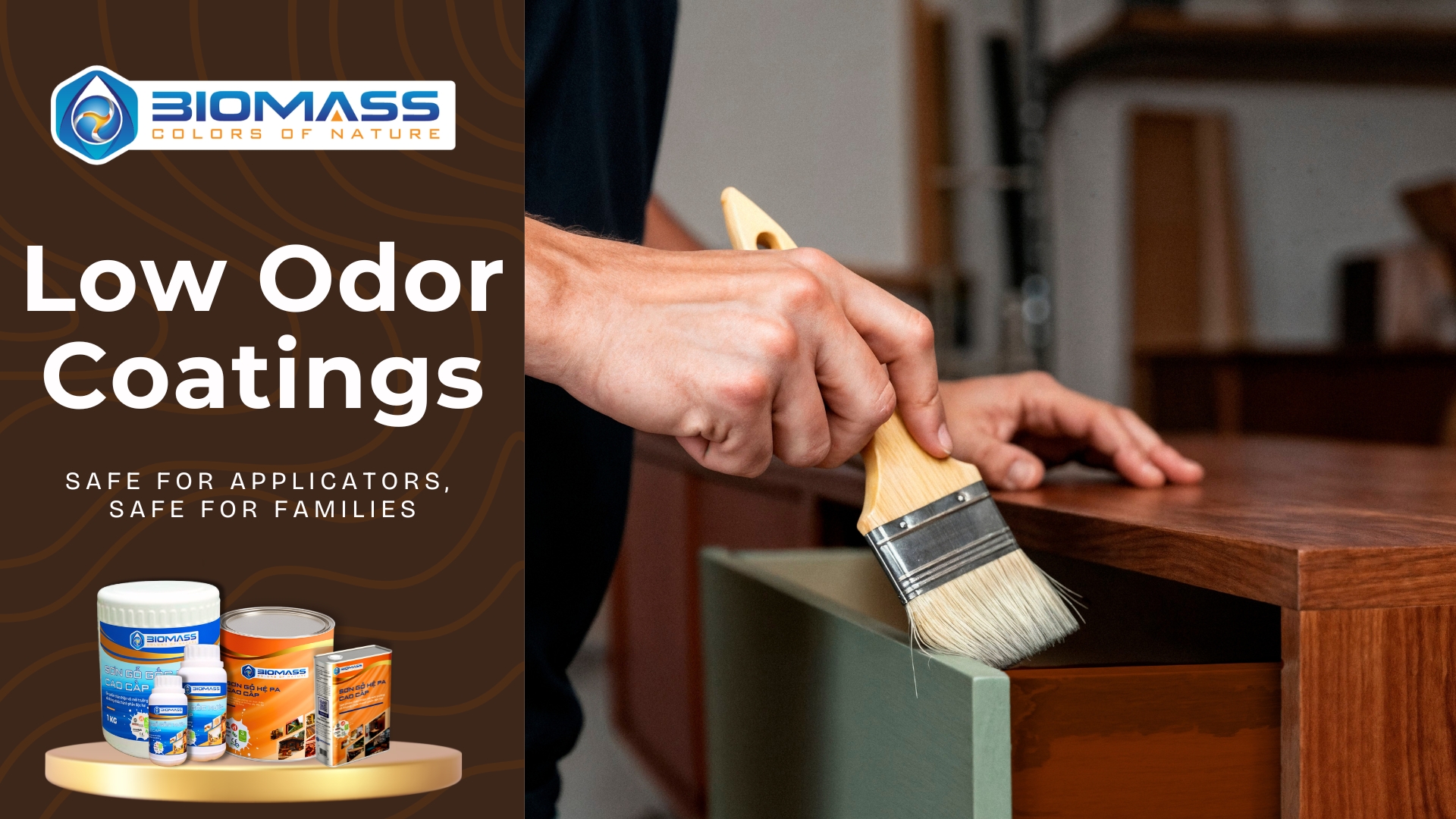
Tin Biomass
LOW-ODOR WOOD COATINGS-SAFE FOR APPLICATORS, SAFE FOR FAMILLIES
In modern furniture production, low-odor wood coatings are increasingly chosen by manufacturers aiming to meet safety standards, improve productivity, and comply with strict export markets such as the EU and the United States. This is not only a technological advancement but also a strategic step toward sustainable and responsible manufacturing.
What Are Low-Odor Wood Coatings?
Low-odor wood coatings are finishing systems with low VOC (Low Volatile Organic Compounds) content or near-zero VOC levels. They are typically water-based or use advanced technologies designed to reduce chemical emissions. VOCs (Volatile Organic Compounds) are organic chemicals that easily evaporate into the air and produce strong odors. High VOC levels can negatively affect indoor air quality and human health.
Why Are Low-Odor Wood Coatings Important?
1. Reduced Odor During Application
Low-VOC products emit significantly fewer fumes and produce milder odors compared to traditional solvent-based coatings. This improves working conditions during application and reduces the need for excessive ventilation.
Additionally, they help protect applicators’ health and minimize residual odor when the furniture reaches end users.
2. Improved Indoor Air Quality & Health Protection
Lower VOC levels mean reduced emissions of harmful gases that may affect:
-
Respiratory health (rhinitis, sore throat)
-
Headaches and discomfort
-
Eye and skin irritation
This is especially important in enclosed indoor spaces or environments with sensitive individuals such as children and the elderly. Water-based wood coatings are often prioritized in high-safety environments. Hence, they not only reduce risks for applicators and surrounding areas but also allow furniture to be used sooner after finishing. They are significantly less odorous than conventional solvent-based coatings.

3. Compliance with International Export Standards
EU and U.S. markets commonly require furniture products to use safe raw materials and coatings with clearly defined VOC limits. Using water-based and low-VOC coatings helps manufacturers more easily achieve environmental and safety certifications required for international trade.
4. Environmentally Friendly
VOC emissions affect more than just the application area. They contribute to ground-level ozone formation and urban smog. In indoor environments, high VOC levels can significantly impact occupants’ health. Reducing VOC emissions is a key component of green building and sustainable manufacturing practices.
Standards for Low-Odor Wood Coatings
1. International Standards
Low-odor coatings are defined by VOC levels below regulatory limits. Under CARB and SCAQMD standards, VOC levels typically must be ≤50–150 g/L to qualify as low-VOC coatings. In Southern California, regulations are stricter under SCAQMD Rule 1113 for architectural coatings. The term “Super-Compliant” refers to products with VOC levels below 10 g/L — an extremely low threshold compared to mandatory limits.
2. Vietnamese Standards
In Vietnam, TCVN 10369:2014 (ISO 17895:2005) is the national standard for determining VOC content in water-based paints. This standard ensures accurate measurement of VOC levels in coating products.
3. Third-Party Low-Emission Certifications
Beyond legal requirements, several third-party certifications verify low emissions and product safety, including:
-
GREENGUARD Gold
-
Green Seal (GS-11)
-
CDPH Standard Method V1.2-2017
These certifications are widely recognized in architecture and construction industries.

Why Choose Biomass Low-Odor Wood Coatings?
1. Health-Safe – Low Odor, Low VOC
Biomass water-based wood coatings are formulated with low VOC content and mild odor, significantly reducing discomfort during application and minimizing airborne irritants that may affect both applicators and end users.
2. Free from Harmful Substances
These products do not contain heavy metals, mercury, lead, phthalates, or toxic VOC compounds, helping minimize long-term health risks associated with indoor wooden furniture.
3. Environmentally Friendly Solvent System
Certain Biomass product lines use water as a complete replacement for traditional organic solvents, which:
-
Reduces VOC emissions
-
Lowers environmental pollution risks
-
Improves indoor air quality
Replacing chemical solvents with water also reduces fire hazards during storage and eliminates the need for thinner additives such as aromatic solvents.
4. GREENGUARD Gold Certified – Verified Low Emissions
Biomass Coating has achieved GREENGUARD Gold certification, demonstrating low chemical emissions and suitability for indoor environments, including schools, healthcare facilities, and homes with children or sensitive individuals.

FAQ – Low-Odor, Non-Toxic Wood Coatings
1. Are Low-Odor Coatings Durable?
Yes. Many modern low-VOC water-based coatings provide:
-
High adhesion strength
-
Good scratch resistance
-
Stable water resistance
-
Long-lasting color durability
For example, Biomass water-based coatings are supplied to international furniture retailers such as IKEA, Article, and Nitori — companies known for strict durability and safety standards.
The key is selecting the appropriate coating system for the intended application (indoor furniture, outdoor use, flooring, etc.).
2. Are Low-Odor Coatings Completely Odorless?
No. Low-odor coatings may still have a slight smell when wet. However, the odor is significantly milder than traditional solvent-based coatings.
Water-based coatings typically dissipate odor more quickly. Some advanced formulations have such minimal odor that it is barely noticeable. Once fully cured and properly applied, residual smell is nearly negligible.
3. How Can Odor Be Minimized During Application?
To reduce odor and ensure safety:
-
Choose water-based low-VOC coatings
-
Ensure adequate ventilation
-
Use exhaust fans or air circulation systems
-
Follow recommended drying times between coats
-
Avoid completely enclosed application spaces
Proper product selection and correct application procedures significantly minimize odor and potential health risks.
Conclusion
Using low-odor (low-VOC) wood coatings not only creates a safer application environment but is also essential for meeting export standards and sustainable manufacturing trends.
It represents a long-term investment in quality, safety, environmental responsibility, and global market competitiveness.